

Tele realizzate da me: Silvana Paruolo


Tele realizzate da me: Silvana Paruolo
EQUILIBRIO TRA MERCATI E TUTELE PER ARGINARE I POPULISMI.
Dopo l’intervista a papa Francesco curata dal direttore Guido Gentili, il Sole 24 prosegue il suo approfondimento dei temi politici e culturali di fondo. L’11 settembre ha proposto un articolo di un importante studioso della società europea, Colin Crouch. Qui di seguito alcuni suoi estratti…
..” Visto che il capitalismo ha quasi distrutto se stesso nella crisi – scrive Crouch – e che ha dovuto chiedere l’aiuto dello Stato per scongiurare una crisi ancora più terribile, sembra arrivato il momento di ripensare i rapporti tra il mercato ela società, come propone il Papa. Ma le forze, che possono rappresentare questo ripensamento sono deboli.
Le forze, che dominano la politica attuale, sono quattro:
1. il neoliberismo (screditato ma ancora influente nei mondi degli affari e della politica)
2. il populismo xenofobo (sempre più potente, aggressivo, con poche idee economiche)
3. la socialdemocrazia (sempre più debole, dopo íl declino della sua base sodale principale, la dasse operaia industriale)
4. la democrazia cristiana, spaccata tra un’ala neoliberista, conservatrice (che oggi vuol dire populista) e una socialdemocratica.
Quali coalizioni possibili esistono tra queste forze, affinché si raggiunga un nuovo bilanciamento tra mercato, regolazione e politica sociale?
Sono possibili alleanze tra il neoliberismo e una xenofobia populista: lo si vede nell’amministrazione di Donald Trump. Ma è rischioso, perché i populisti rifiutano la globalizzazione e la sovranità della legge sul governo, due cose care al neoliberalismo.
Sono possibili anche coalizioni tra gli xenofobi e socialdemocratici, se questi ultimi pongono l’enfasi della loro politica sullo Stato nazionale e il suo popolo nativo. Si vedono discussioni di questo tipo in Italia, in Danimarca, nel Regno Unito, e tra i nuovi gruppi della sinistra tedesca. Tali coalizioni potrebbero portare a un nuovo protezionismo.
Infine sono possibili coalizioni tra neoliberalismo e socialdemocrazia. Abbiamo esperienze molto recenti di questi rapporti, nel Regno Unito di Tony Blair, nella Germania di Gerhard Schroeder, in Austria, in Olanda, nei Paesi scandinavi. Tutti sono finiti tra le lacrime, perché i socialdemocratici hanno offerto troppi compromessi al neoliberismo e dunque non potevano opporsi alle forze che d hanno condotto alla crisi finanziaria. Questi compromessi hanno anche creato un centro troppo ampio, che ha relegato il conflitto politico agli argini, dove sono fioriti i populisti della destra estrema. Eppure c’è ancora bisogno di compromessi tra fautori del libero mercato e quelli delle politiche sociali, come ha esortato il Papa….
Quanto segue non e’ scritto da me -Silvana Paruolo – in quanto riporto un Comunicato stampa dell ‘OIL
BRICS Labour and Employment Ministers’ Meeting COMUNICATO STAMPA ILO (Organizzazione internazionale del lavoro)
ILO Director-General, Guy Ryder, praises the commitment to social dialogue and tripartism made by BRICS nations – Brazil, Russia, India, China and South Africa – in a speech at the group’s Labour and Employment Ministers’ Meeting in South Africa.
Madame Chairperson – Madame Minister Mildred Oliphant,
Honourable Representatives of our host municipality and region,
Ministers, Representatives of Governments, Employers and Workers,
Colleagues, Ladies and Gentlemen,
I begin by expressing sincere gratitude to you, Madame Minister, and to your team for the excellent arrangements made for this meeting and for bringing us to your beautiful home region.
Thank you too for the opportunity offered to me to address this 4th Meeting of BRICS Labour and Employment Ministers , as I have each of the previous meetings in Ufa, in Delhi and last year in Chongqing .
I think that this reflects the importance of the partnership which has developed between the BRICS group and the ILO since the idea of a BRICS labour track was born in Brazil back in 2014. Allow me to convey to you today how much the ILO values this relationship and our strong commitment to offer you our support for your ongoing work. This is also demonstrated by the presence here in Durban of senior colleagues from the ILO technical departments responsible in each of the issues on your agenda and from the Turin International Training Centre .
Ministers, this commitment has its origins in three considerations:
Madame President,
As we move forward from this Ministerial in Durban with the important Declaration that has been proposed for your adoption, to next year’s Brazilian Presidency which in a sense completes the first cycle of BRICS Labour and Employment Ministerial Meetings, my belief is that it is of crucial importance that the issues which we address find their full and proper place not only in BRICS declarations but in substantive cooperative work programmes and in implementation. And I will return to that thought briefly at the end of my remarks.
But just before that, a few comments about the substance of today’s and tomorrow’s agenda.
Certainly the South African Presidency is to be congratulated for giving prominence to social dialogue and tripartism – and the presence of the strong worker and employer representation in this room from which we have already heard shows that it is truly “walking the talk” on this, in BRICS and also in NEDLAC as we have heard, and I am very encouraged that BRICS considers tripartism as an integral part of its work. For obvious reasons this is music to the ILO’s ears. And this meeting comes shortly after this year’s International Labour Conference had an important discussion on social dialogue and adopted a resolution on it. That discussion confirmed the inherent value of social dialogue, particularly at times of deep and accelerated change in work, and reflected the variety of ways in which it can be and is practised in our member States around the world. But I am conscious as well of the pressures and challenges faced by tripartism. Its value is questioned by some, and in general it is becoming more difficult, or so it seems, for us to talk and to listen to each other.
The best response, I believe, is to demonstrate the added value of social dialogue by making it work. So I hope that the fullest use will be made, by the social partners in particular, of the space and opportunity afforded to them here in the BRICS arena.
Madame Minister,
I have the habit of saying that when I ask a Labour Minister of any of our 187 member States what their absolute top priority is, the answer nine times out of ten is jobs for young people. I don’t know if that applies to the BRICS but in any case it is absolutely right that youth employment figure in your deliberations. We know the immensity of the challenge, and we know that we need multi-pronged approaches balancing demand side and supply side interventions, and we know that skills formation must be at the heart of what we do.
From these understandings we simply have to pass to concrete action. At the ILO we are leading the UN-wide Global Initiative on Decent Jobs for Youth, thus spearheading the system’s delivery on the key SDG 8 of the UN 2030 Sustainable Development Agenda .
And because we are aware that youth employment depends crucially on overall labour market conditions, allow me, Madame Minister to congratulate the Government of South Africa for its determination to convene a Jobs Summit later this year. We know how important it is and the ILO stands ready to offer whatever assistance may be helpful to its success.
But in a meeting such as this on inclusive growth and on shared prosperity, we must address the largely unfinished business of women’s participation and equal pay. Not coincidentally this was precisely the subject of my own report to this year’s ILC, which advocated a new push for gender equality. Essentially that report asked one question. How is it possible, more than half a century after the ILO adopted fundamental rights conventions on equal pay and on gender non-discrimination, and following their ratification by the great majority of countries, that a woman still has 30% less chance of being in the labour force – and often being at the bottom of the ladder even then and will be paid on average about 20% less than men.
What, then, are the continuing obstacles to equality and more importantly, what must we do to finally break them down? One of the answers and maybe the most important has to do with care and the care economy. Women today do the overwhelming part of unpaid care work – and this often prevents them entering paid work. World-wide there is a very marked “motherhood employment penalty” for women with young children. Just looking at the BRICS countries, 42% of those women work while for fathers the figure is 88%. Moreover the ILO estimates that a high road and professional care economy has the potential to generate no less than 159 million new jobs in your countries.
And on the issue of pay – the ILO is a co-leader of the new Equal Pay International Coalition, EPIC, established to deliver on SDG 8.5 of the 2030 Agenda which is equal pay for work of equal value. That coalition would gain enormously from the concerted support of the BRICS countries.
Madame Chair,
Coming finally to social protection, it is heartening indeed to recognize both the substantive work undertaken together by BRICS Labour and Employment Ministers, and also the extraordinary progress made at national level in your countries which means that many millions of people previously unprotected now enjoy benefits which enhance their income security and access to health care. This progress is reflected in the interest in ratification of the relevant ILO Conventions in BRICS countries. I particularly refer to Convention 102, and I understand that that process is close to conclusion in the Russian Federation – which I warmly welcome.
Understanding that we still have much to do, and much to learn from each other, I believe that the BRICS Social Security Cooperation Framework, launched last year in Chongqing has enormous potential which we must fully exploit, and which with our colleagues from ISSA the ILO stands ready to support, not least as we take up the challenge of delivering SDG 1.3 on nationally appropriate social protection floors for all.
And that leads me to my final point.
With the Framework on Social Security and the BRICS Network of Labour Research Institutes that was also established in Chongqing last year, you have already put in place some important mechanisms to sustain and to deepen substantive policy cooperation among the BRICS countries. The MoU attached to the draft Durban Declaration provides a platform to take this forward, and I see this as a most important opportunity to ensure that social and labour issues do indeed occupy their full and proper places in BRICS processes.
I regard it as a responsibility of the ILO to accompany you in the initiatives that you decide upon.
That is precisely why my colleagues from the Turin Centre are here and will present to the meeting tomorrow morning a partnership proposal between the BRICS, the Turin Centre and the ILO itself which I believe can help strengthen our work together in the areas of key importance, to give us continuity and to give us capacities for implementation. One of the benefits will be to strengthen our capacities to facilitate South-South and triangular cooperation.
Madame Chair,
These are thoughts which I hope can carry us forward from Durban to the Brazilian Presidency with commitment and with optimism.
I am mindful as others have been that next year is the ILO’s centenary year, and this coincides also with the celebration of the Mandela centenary which we will also mark.
As you know, the ILO is focusing its centenary on the future of work, with a Global Commission, co-chaired by President Ramaphosa of South Africa and the Prime Minister of Sweden, and in which Commissioners of every BRICS country are serving. That Commission will publish its report in January and it may be that BRICS Labour and Employment Ministers will wish to take it into account as you plan the future of your own work. We have real opportunities, I believe, to go forward together.
With this let me again congratulate you, Madame Minister, for your leadership and thank you all for your attention.
Tags: future of work, employment policy, social protection, ILO Director General, ILO centenary
Regions and countries covered: South Africa, Brazil, India, China, Russian Federation
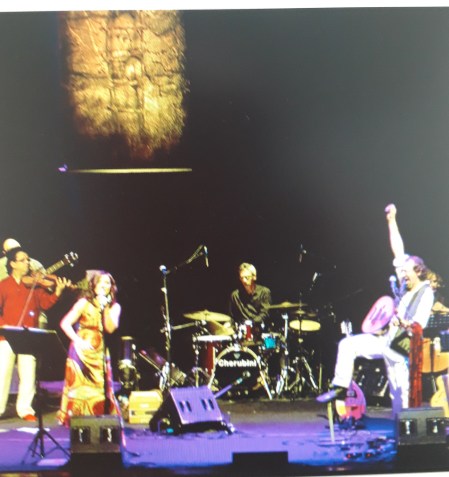
In un momento in cui si tende a innalzare nuovi muri, con brani di Fairuz, Umm Kulthum, Amalia Rodrigues, SezenAksu, Rosa Balistreri e il repertorio di Stefano Saletti & Banda Ikona, questo splendido concerto del 2 agosto – attraverso voci di donne cantanti, scrittrici, madri, rifugiate, e migranti e attraverso l’incontro di tradizioni musicali delle due sponde del Mare nostrum – vuole raccontare il Mediterraneo, (mare che bagna e divide l’Europa, l’Africa, i Balcani e il Medio Oriente) per evidenziare (attraverso la musica e le parole) che ciò che unisce è più forte di ciò che divide.
Sul palco:
– una grande orchestra popolare, la Banda Ikona con Stefano Saletti (oud, bouzouki, chitarre, voce), Gabriele Coen (fiati), Mario Rivera (basso acustico), Carlo Cossu (violino), Giovanni Lo Cascio (batteria e percussioni), Arnaldo Vacca (percussioni), Alessandro D’Alessandro (organetto)
– alcune delle voci più affascinanti della scena popolare e world : Barbara Eramo, Lucilla Galeazzi, YaseminSannino, Gabriella Aiello, Eva Coen, Raffaela Siniscalchi.
Ospiti Nando Citarella (voce e tammorra) e PejmanTadayon (ney, daf) del Cafè Loti.
Ci sarà anche la partecipazione del coro “Voci migranti”curato da Stefano Saletti e Barbara Eramo, del “Baobab Ensemble” e di due cori diretti dal maestro Angelo Fusacchia: il Coro Rifugiati e richiedenti asilo Centri Sprar Cooperativa sociale “Tre Fontane” e il Coro polifonico“Istituto Corelli”.

Ue: una nuova Agenda per la cultura? E’ il titolo della mia inchiesta, leggibile in questo ultimo numero di Tempo Libero (rivista on line della Fitel): qui di seguito il suo link:
Buona lettura!

L’ autunno-inverno 2018 sarà caratterizzato,in particolare, da fiori, righe, nodi, superficie lucide, argento, mix, mantelle, capi soffici e piumini.


Un lavoratore distaccato è un dipendente che viene inviato dal suo datore di lavoro a prestare temporaneamente servizio in un altro Stato membro dell’UE. I lavoratori distaccati nell’Unione – secondo statistiche del Parlamento europeo – erano 2,3 milioni nel 2016. Il fenomeno del distacco è aumentato del 69% tra il 2010 e il 2016. Imprese italiane hanno distaccato all’estero 114.515 i lavoratori, di cui il 18,7% in Francia, il 10,2% in Germania e il 36,6% al di fuori dell’Unione, in Svizzera. Sono invece 61.321 i lavoratori distaccati in Italia, più della metà provenienti dalla Germania (18,8%), dalla Francia (18,3%) e dalla Spagna (14%).
Il 9 luglio 2018, è stata pubblicata sulla Gazzetta Ufficiale UE la Direttiva n. 957 del 28 giugno 2018 – che apporta modifiche alla Direttiva n. 96/71 sul distacco transnazionale del lavoratori – alla cui adozione si sono fortemente opposte, sia le organizzazioni datoriali europee, sia i paesi dell’Est (“esportatori” di manodopera a basso costo). Qui di seguito il suo link:
https://www.chiomenti.net/public/files/0/Direttiva-UE-2018-957-sul-distacco-dei-lavoratori.pdf.
Gli Stati membri UE dovranno adeguare le normative nazionali essere entro il 30 luglio 2020.
La nuova direttiva traccia una rotta chiara verso un’Europa più sociale, con una concorrenza più equa tra imprese e con un miglioramento dei diritti dei lavoratori. Anche se non esente da criticità, – segnando una svolta – la direttiva riflette il “principio che lo stesso lavoro nello stesso posto dovrebbe essere retribuito allo stesso modo”. E cambia, in modo significativo, l’approccio UE al problema del dumping salariale.
La direttiva stabilisce nuovi limiti di durata massima del distacco transnazionale, fissati in 12 mesi, con possibilità di proroga di 6 mesi. Trascorso tale termine, il lavoratore può restare o lavorare nel Paese ospitante, ma dovrà a quel punto essere soggetto all’intera normativa sul lavoro vigente in quello Stato.
La direttiva prevede inoltre nuove regole per la retribuzione da corrispondere ai lavoratori distaccati all’estero. A tutti i lavoratori distaccati si applicheranno le norme del Paese ospitante in materia di retribuzione. Gli Stati membri dovranno, inoltre, applicare anche i contratti collettivi regionali o settoriali, se di ampia portata e rappresentativi (finora applicati solo nel settore delle costruzioni). La finalità è quella di garantire una migliore protezione dei lavoratori distaccati e una concorrenza leale tra imprese.
Il versamento dei contributi (previdenziali e pensionistici) a favore del lavoratore distaccato va effettuato nel Paese di origine, mentre la retribuzione è quella del paese ospitante. In altri termini, il distacco permette a una società di inviare in un altro Stato dell’Unione un proprio lavoratore, versando i contributi nel Paese d’origine: questo principio è stato criticato, negli ultimi anni, dopo l’allargamento della Unione ai paesi dell’Est, poiché questi ultimi hanno costi previdenziali e salariali assai più bassi dei paesi dell’Ovest (la Francia, ma anche l’Italia, li hanno accusati di dumping sociale, inviando propri lavoratori all’Ovest, in particolare nei settori dell’edilizia e dei trasporti).
Superato il periodo massimo, devono essere applicate – in toto – le regole del Paese in cui si svolge la prestazione di lavoro.
In caso di distacco fraudolento, ad esempio operato da una società di comodo, gli Stati membri dovrebbero cooperare per garantire che i lavoratori distaccati siano protetti perlomeno dalle tutele contenute nella direttiva.
Al settore dei trasporti si applicherà la legislazione settoriale specifica, inclusa nel Pacchetto mobilità, una volta che sarà approvata. Fino ad allora, sarà applicata – per il settore – la direttiva del 1996.
Tra i punti critici di questa nuova direttiva, un Nota della CGIL sottolinea quanto segue:
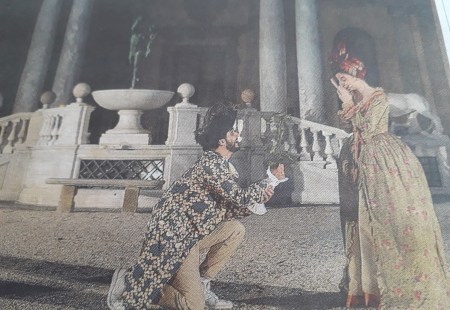

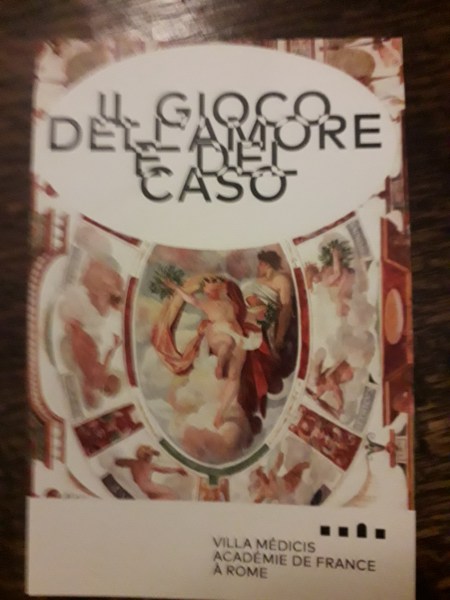
Muriel Mayette-Holtz (artista attrice regista, ex-Amministratrice della Comédie Française e attuale direttrice dell’Accademia di Francia a Roma) – tornando alle origini – firma la regia di un classico del teatro francese del ‘700, “Il Gioco dell’amore e del caso” di Pierre de Marivaux, dal 10 al 20 luglio 2018 in scena nella sua Villa Medici, con una compagnia di attori che offre il testo in due lingue (passando dal francese all’italiano) con musiche dal vivo, composte ed eseguite da Margot Mayette.
In questo geniale lavoro sulla complessità dei sentimenti, un doppio scambio di ruoli dà luogo a un flusso inarrestabile di equivoci.
Questa la sua trama..
Orgone ha una figlia, Silvia, alla quale concede di vestire i panni della sua cameriera, Lisetta, allo scopo di studiare segretamente i comportamenti del suo futuro sposo, il giovane Dorando. Anche Dorando, però, ha usato lo stesso stratagemma: mascherato da Arlecchino, suo servitore, studierà il comportamento di Silvia. Silvia e Dorando, nei panni dei rispettivi servi, si innamorano e la stessa cosa accade anche ai due servitori che indossano le vesti dei loro padroni. Dopo ripicche, equivoci, e necessari chiarimenti, la commedia avrà il suo lieto fine con il doppio matrimonio tra Silvia e Dorando e tra Arlecchino e Lisetta.
Nei panni dei giovani protagonisti, il pubblico trova gli attori del Centro Teatrale Santa Cristina fondato da Luca Ronconi e Roberta Carlotto: Silvia è Marina Occhionero, Dorando è Luca Tanganelli; i panni di Lisetta li veste Marial Bajma Riva; Matteo Cecchi è Arlecchino, Matthieu Pastore è Mario.
Nella splendida cornice di Villa Medici: bello spettacolo, divertente, brillante e intrigante!




http://www.lfmagazine.it/altaroma-le-sfilate-di-international-couture-affascinano-cinecitta/
– Questo servizio non e’ stato scritto da me

